
October 4, 2026
What Is an AI Agent? How Agents Work and Where They Fit
Learn what an AI agent is, how it differs from a chatbot or automation, and what to consider before using one for real tasks.
Artikel lesen
Blog-Artikel
Explore the fundamental differences between JavaScript and Java, their purposes, functionalities, and how they are used in development.
laszlo
January 13, 2025
2 Min. Lesezeit
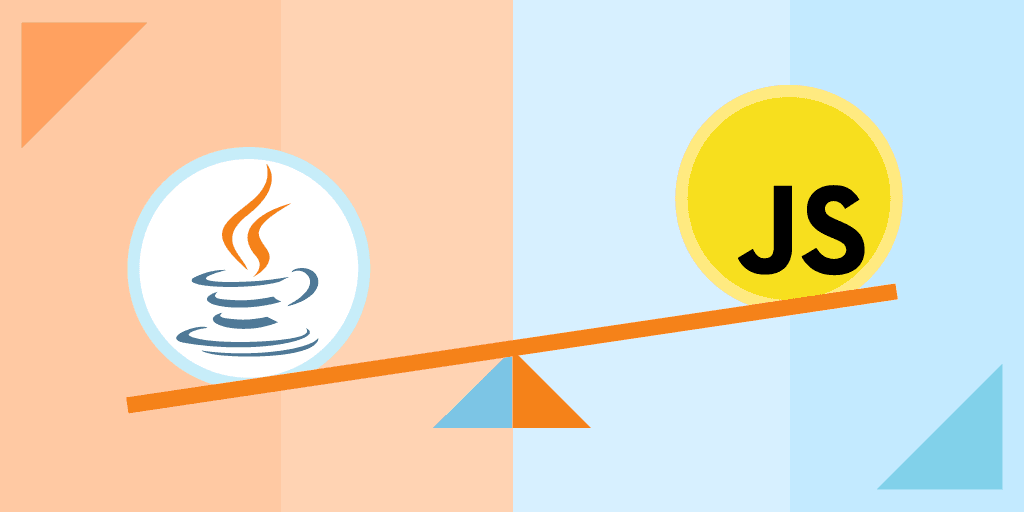
Image source: miro.medium.com
Teilen
JavaScript and Java are two widely-used programming languages, but they serve different purposes and have distinct features. Despite their similar names, they are fundamentally different in design, functionality, and application. Let’s break down the key differences:
Java:
Developed by Sun Microsystems (now owned by Oracle) in 1995.
Designed as a general-purpose, object-oriented programming language for building platform-independent applications.
Commonly used in enterprise applications, mobile development (Android), and backend systems.
JavaScript:
Created by Brendan Eich in 1995 while working at Netscape.
Initially developed for adding interactivity to websites in browsers.
Now used for both client-side (frontend) and server-side (e.g., Node.js) development.
Java:
Compiled into bytecode and runs on the Java Virtual Machine (JVM), making it platform-independent ("write once, run anywhere").
Requires installation of the Java Runtime Environment (JRE).
JavaScript:
Interpreted directly by web browsers (e.g., Chrome, Firefox).
Can also run on servers using environments like Node.js.
Java:
Statically typed: Data types (e.g., int, String) must be declared explicitly.
Code is written in a class-based structure.
Example:
public class HelloWorld {
    public static void main(String[] args) {
        System.out.println("Hello, World!");
    }
}
JavaScript:
Dynamically typed: Variables do not require explicit type declarations.
Flexible and does not rely on a strict class structure (prior to ES6, which introduced classes).
Example:
console.log("Hello, World!");
Java:
Building desktop applications.
Backend development for large-scale systems (e.g., Spring, Hibernate).
Android app development.
Embedded systems.
JavaScript:
Frontend development (e.g., dynamic web pages).
Server-side scripting with Node.js.
Building web and mobile apps using frameworks like React, Angular, or Vue.js.
Java:
Generally faster due to its compiled nature.
Well-suited for applications requiring high performance and scalability.
JavaScript:
Slower compared to Java because it is interpreted.
Best for lightweight, interactive applications.
Java:
Supports multithreading, allowing multiple tasks to run concurrently.
Ideal for handling complex, high-load operations.
JavaScript:
Single-threaded, but supports asynchronous operations through event loops, promises, and async/await.
Efficient for I/O operations and real-time applications.
Java:
Mature ecosystem with extensive libraries and frameworks (e.g., Spring, Hibernate).
Strong presence in enterprise and academic fields.
JavaScript:
Rapidly evolving with a huge ecosystem of libraries and frameworks (e.g., React, Angular, Vue.js).
Dominates the web development landscape.
Entdecke ReadyTools: die ultimative Produktivitätssuite für Creator. Wunderschöne Linksy-Seiten, smarte Lara-KI, Projektmanagement, sicherer Cloud-Speicher und alles andere, was du brauchst – vereint an einem Ort. Starte noch heute deine 7-tägige kostenlose Testphase.
ReadyTools erkundenWeiterlesen
October 4, 2026
Learn what an AI agent is, how it differs from a chatbot or automation, and what to consider before using one for real tasks.
Artikel lesen

October 2, 2026
Capture a webpage, place the screenshot in an iPhone frame, adjust the scene, and export a polished image or animation from one browser extension.
Artikel lesen

September 30, 2026
No settings to flip.No plan changes required. If you’re already on Max, Lara is running the new model. If you use Agent mode on Plus you are getting it too
Artikel lesen