October 18, 2026
ReadyTools Workspace Adds Databases and a Daily Today View
Explore how Workspace Databases organize connected records, while the Today block brings daily priorities into view alongside other Workspace tools.
Leer artículo
Artículo de blog
Python in 2026 isn’t just faster — it’s smarter, safer, and more powerful than ever. With Python 3.14 now the standard, developers have access to features
readytools
February 25, 2026
3 min de lectura
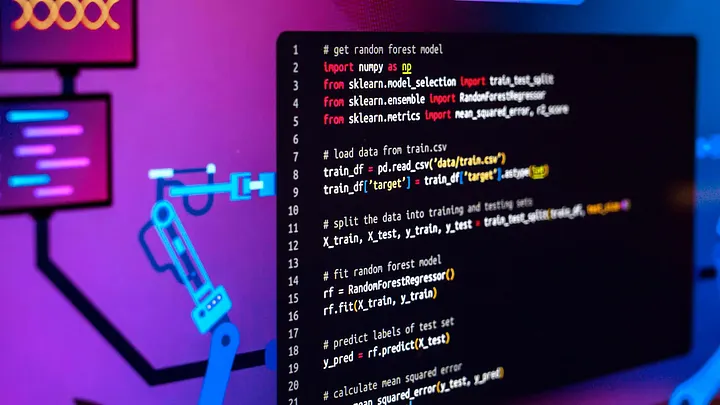
Image source: miro.medium.com
Compartir
Python in 2026 isn’t just faster — it’s smarter, safer, and more powerful than ever. With Python 3.14 now the standard, developers have access to features that solve real pain points in production code. Here are the top 10 Python tricks every serious coder should master this year.
Forget risky f-strings for dynamic SQL, HTML, or logging. t-strings (PEP 750) return a Template object instead of a plain string, giving you full control over every interpolated value before it becomes text.
from string.templatelib import Interpolation
def safe_html(template):
parts = []
for part in template:
if isinstance(part, Interpolation):
# Sanitize or escape here
value = str(part.value).replace("&", "&")
parts.append(value)
else:
parts.append(part)
return "".join(parts)
user_input = "<script>alert('xss')</script>"
template = t"<div>Hello {user_input}!</div>"
print(safe_html(template))
# Output: <div>Hello <script>alert('xss')</script>!</div>Why it matters in 2026: Zero injection risks in templates. Perfect for ORMs, logging libraries, and code generators.
Annotations are now lazy by default (PEP 649). Forward references and circular imports just work without quotes or from __future__ import annotations.
from dataclasses import dataclass
from typing import Optional

@dataclass
class Node:                  # No NameError!
    value: int
    next: Optional["Node"] = None

# Introspect safely
from annotationlib import get_annotations
print(get_annotations(Node))
Pro tip: Remove every __future__ import from your codebase today — Python 3.14+ handles it natively.
Python 3.14 makes free-threaded builds production-ready. Run your code with python3.14t (or the t installer on Windows) and threads finally scale across cores.
# Run your script without GIL
python3.14t -X gil=0 my_app.pyimport threading
def cpu_heavy():
return sum(i * i for i in range(10_000_000))
threads = [threading.Thread(target=cpu_heavy) for _ in range(8)]
for t in threads: t.start()
for t in threads: t.join()2026 reality check: Expect 5-10% single-thread overhead but massive gains on multi-core workloads.
Need true isolation without multiprocessing overhead? Use the new concurrent.interpreters module.
from concurrent.futures import InterpreterPoolExecutor
from time import perf_counter

def heavy_computation(n):
    return n ** 2  # Replace with real CPU work

start = perf_counter()
with InterpreterPoolExecutor(max_workers=4) as pool:
    results = list(pool.map(heavy_computation, range(100_000)))
print(f"Done in {perf_counter() - start:.2f}s")
Why developers are obsessed: Lower memory than processes, works with free-threading, perfect for data pipelines and simulations.
No more shutil boilerplate.
from pathlib import Path

src = Path("large_dataset/")
dst = Path("/backup/2026/")

# One-liner recursive copy
src.copy(dst / "dataset_backup")

# Atomic move
Path("temp_results.csv").move("/archive/final_results.csv")Still one of the most powerful one-liners in 2026:
# Process only expensive items that meet criteria
if (processed := [x**2 for x in data if (x := expensive_check(x)) > 10]):
print(f"Found {len(processed)} winners!")Match complex data structures like a pro:
def handle_event(event):
    match event:
        case {"type": "click", "coords": (x, y)}:
            print(f"Clicked at {x},{y}")
        case {"type": "key", "key": k} if k in ("Enter", "Escape"):
            print("Special key!")
        case _:
print("Unknown event")functools.cache is now smarter than ever:
from functools import cache

@cache
def fibonacci(n: int) -> int:
    return n if n < 2 else fibonacci(n-1) + fibonacci(n-2)

# Instant on repeated calls
print(fibonacci(500)) # No recursion depth issuesCreate stateful pipelines in one line:
def interactive_filter():
    gen = (x * 2 for x in range(100))
    for val in gen:
        if (response := yield val) == "stop":
            break

pipeline = interactive_filter()
next(pipeline)  # Start
print(pipeline.send("continue"))Massive memory wins for large object graphs:
class Point:
    __slots__ = ["x", "y"]   # Saves ~50% memory per instance

# Python 3.14's incremental GC keeps pauses tiny even with millions of Points
These 10 tricks aren’t theory — they’re battle-tested patterns used in production at scale in 2026. Start with t-strings and deferred annotations today; you’ll thank yourself tomorrow.
Bookmark readytools.co for weekly deep dives, ready-to-use code templates, and the latest dev tools.
Descubre ReadyTools: la suite de productividad definitiva para creadores. Hermosas páginas de Linksy, la IA inteligente de Lara, gestión de proyectos, almacenamiento seguro en la nube y todo lo que necesitas, todo junto. Comienza tu prueba gratuita de 7 días hoy mismo.
Explorar ReadyToolsTabla de Contenidos
Sigue leyendo
October 18, 2026
Explore how Workspace Databases organize connected records, while the Today block brings daily priorities into view alongside other Workspace tools.
Leer artículo
October 11, 2026
Learn how to add a Canvas block in ReadyTools, sketch ideas, build diagrams with Lara, embed files, collaborate, and export your work.
Leer artículo
October 6, 2026
the platform has continued moving from individual API endpoints toward something much closer to the infrastructure we originally wanted to build.
Leer artículo