October 18, 2026
ReadyTools Workspace Adds Databases and a Daily Today View
Explore how Workspace Databases organize connected records, while the Today block brings daily priorities into view alongside other Workspace tools.
Cikk elolvasása
Blog cikk
Learn how to start a Next.js project in 2026, choose the right setup, understand the App Router, and build a useful first feature.
readytools
September 28, 2026
13 perc olvasás

Image source: i.pinimg.com
Megosztás
Starting with Next.js in 2026 does not require learning the entire React ecosystem first. The most reliable path is to create a small application with the current starter, keep the default App Router structure, and learn the boundary between server and client code while building one complete feature.
A good first project might be a notes page, a reading list, a simple dashboard, or a small catalog. It should include several pages, form input, data loading, and a clear interface. That scope is large enough to teach the parts of Next.js that matter, but small enough to finish.
Next.js is a framework for React applications. React handles components and interfaces, while Next.js adds conventions and server features for routing, rendering, data access, and application structure.
Before starting, a beginner should be comfortable with the following JavaScript and React concepts:
async and await syntaxDeep React expertise is not required. However, trying to learn JavaScript, React, TypeScript, databases, authentication, and Next.js at the same time makes the first project difficult to diagnose. Build a small React component or two before adding a database or login system.
The standard starting point is the project generator. Make sure a supported Node.js version is installed, then run:
npx create-next-app@latest my-next-appMove into the new directory and start the development server:
cd my-next-app
npm run dev
Open the local address shown in the terminal. The starter project normally includes a development server, a package configuration, TypeScript options when selected, and the basic application structure.
The generator asks several setup questions. The exact wording can change between releases, but the decisions usually cover TypeScript, linting, styling, the App Router, and import aliases. A sensible beginner setup is:
Do not spend too long searching for the perfect configuration. Most of these choices can be changed later. The first useful milestone is a running application with one page that can be edited and viewed locally.
With the App Router, folders inside the app directory define the application's route structure. A folder becomes part of the URL when it contains a page file.
app/
  page.tsx
  about/
    page.tsx
  projects/
    page.tsx
  projects/[id]/
    page.tsx
This structure represents three routes:
/, provided by app/page.tsx/about, provided by app/about/page.tsx/projects and individual project pages, provided by the files inside app/projectsA folder named in square brackets is a dynamic route segment. For example, app/projects/[id]/page.tsx can render a project based on its id value.
The layout.tsx file is used for shared interface surrounding a route. A root layout commonly contains the document metadata, global styles, and the shared page shell. Nested layouts can keep navigation or other interface elements in place for a group of routes.
// app/about/page.tsx
export default function AboutPage() {
  return (
    <main>
      <h1>About this project</h1>
      <p>A small application built while learning Next.js.</p>
    </main>
  )
}
The default export is the component rendered for that route. Starting with simple route files makes it easier to see how the folder structure maps to the application.
One of the most significant ideas in modern Next.js is that components are not all executed in the same place. App Router pages and components are server components by default. A component becomes a client component when it includes the "use client" directive at the top of the file.
Server components are a good default for pages that display data, assemble layouts, or render content without browser-only interaction. Client components are needed for interaction that depends on browser state, such as a button that updates local state, a dialog, a drag-and-drop control, or a form with client-side behavior.
// app/counter.tsx
"use client"

import { useState } from "react"

export default function Counter() {
  const [count, setCount] = useState(0)

  return (
    <button onClick={() => setCount(count + 1)}>
      Clicks: {count}
    </button>
  )
}
The directive is not a general performance switch. It changes the component boundary and allows client-side React features such as state and event handlers. Adding it to a large component can move more code into the browser than necessary, so keep interactive elements small when practical.
Use a server component when the component primarily:
Use a client component when it needs:
useState, useEffect, or another client-side React hookwindow or localStorageonClick or onChangeA useful pattern is a server-rendered page containing a small client component. For example, a product page can load product details on the server while a client component handles quantity changes or an expandable description.
The fastest way to understand Next.js is to build a feature that travels through the whole application. A reading list works well because it can begin with static data and later gain a form and persistence.
Start with a typed data shape:
type Book = {
  id: string
  title: string
  author: string
  finished: boolean
}
Then create a page that displays a small array of books. Once that works, add a dynamic details route. After the route works, add a form or button that changes the list. Each step introduces one new concept without hiding the cause of a problem behind several new dependencies.
A page can use an asynchronous component when it needs to load data before rendering. The exact data source can be a local module, an internal service, or an external API.
type Book = {
  id: string
  title: string
  author: string
}

async function getBooks(): Promise<Book[]> {
  const response = await fetch("https://example.com/api/books")

  if (!response.ok) {
    throw new Error("Could not load books")
  }

  return response.json()
}

export default async function BooksPage() {
  const books = await getBooks()

  return (
    <main>
      <h1>Reading list</h1>
      <ul>
        {books.map((book) => (
          <li key={book.id}>
            {book.title} by {book.author}
          </li>
        ))}
      </ul>
    </main>
  )
}
For a real application, the request should handle failures and the interface should have an appropriate loading and error experience. A working request is only part of the feature. Users also need to know what is happening when data is slow, missing, or invalid.
A route should account for at least three states: successful content, loading, and failure. The App Router supports route-level files that help organize those states.
app/books/
  page.tsx
  loading.tsx
  error.tsx
A loading.tsx file can display a placeholder while the route is being prepared. An error.tsx file can provide a recovery interface when a route-level error occurs. Error components have client-side requirements because recovery actions such as retrying use browser interaction.
There is no need to create elaborate skeleton screens for a first project. A short message or simple placeholder is enough to make the state explicit. The important lesson is to design for waiting and failure instead of testing only the successful response.
Forms are where a small tutorial project starts to resemble a real application. Begin with a form that collects one or two fields and validate the input before attempting to save it.
For a first implementation, a client component can manage the field value and submit the form. A server-side operation can then handle the write. The boundary should be clear: the browser gathers input, while trusted server code performs operations that require server access.
Keep these questions visible while building:
Do not place private credentials in a client component. Environment variables intended for browser exposure must be treated differently from server-only configuration, and a secret should never be sent to the browser simply because a component needs a value.
Next.js does not force a single database, API, or hosting arrangement. That flexibility is useful, but it can create unnecessary decisions for a beginner.
Choose the simplest data source that lets the feature behave realistically:
A database should solve a project requirement, not serve as proof that the application is advanced. If the goal is to understand routing, adding authentication and a data layer at the same time can make every error ambiguous.
Use the framework's navigation component for links between application routes rather than creating every link as a plain browser navigation. Give each destination a clear label and make the page structure understandable without relying only on visual styling.
A basic navigation component might look like this:
import Link from "next/link"

export default function Navigation() {
  return (
    <nav aria-label="Main navigation">
      <ul>
        <li><Link href="/">Home</Link></li>
        <li><Link href="/books">Reading list</Link></li>
        <li><Link href="/about">About</Link></li>
      </ul>
    </nav>
  )
}
Accessibility is easiest to address while the structure is still small. Use headings in order, label form fields, provide useful button text, and make error messages visible. A visually polished interface with unclear controls is still difficult to use.
TypeScript is most helpful when data crosses a boundary. Define the shape of props, API responses, form data, and route parameters. This makes mismatches visible before they become runtime bugs.
type BookCardProps = {
  book: {
    id: string
    title: string
    author: string
  }
}

export function BookCard({ book }: BookCardProps) {
  return (
    <article>
      <h2>{book.title}</h2>
      <p>{book.author}</p>
    </article>
  )
}
Avoid using any to silence every error. At the same time, do not turn a small learning project into a type-system exercise. Start with the data that matters to the feature and expand the types when the application gains real cases.
One of the most common early mistakes is importing a server-only module into a client component or trying to use a browser API while rendering on the server.
Typical warning signs include:
window or document during initial rendering"use client" to the entire page to work around one interactive controlWhen a page needs both server data and client interaction, split it into components. Keep the data-loading portion on the server and pass only the necessary serializable values to the interactive child.
Run the development server while working, but also check the production build before calling the project finished. Development behavior can hide issues that appear during a production build or deployment.
A useful testing sequence is:
Directly opening a nested route matters because navigation from the home page can work even when a route does not handle a refresh correctly. Testing invalid data matters for the same reason: users do not follow the ideal path every time.
These features should follow the first complete user flow. Add persistence when data must survive a restart. Add authentication when the application needs to distinguish users or protect private actions. Add a deployment target when the local flow works well enough to test outside the development environment.
Adding all three before a basic route and form work creates several independent failure points. A more manageable progression is:
This order also makes it easier to replace one part later. A page that cleanly separates display, validation, and data access is less dependent on the first service chosen.
Removing every default file immediately can make the project feel cleaner, but it also removes useful clues. Read the root layout, page, styles, and package scripts before replacing them. Delete only what the first feature does not need.
This often happens when a beginner encounters one event handler. Move the button, input, or interactive panel into a client component instead of marking the complete route as client-side.
A router, form library, state manager, component kit, animation package, and data-fetching library can all be useful in the right project. None is required to understand the basic Next.js flow. Add a dependency when it removes a clear source of repeated work, not because a tutorial lists it.
A page that works only with a successful response is incomplete. Test slow requests, empty results, invalid identifiers, rejected submissions, and missing configuration. These cases reveal whether the application has a coherent data flow.
Environment variables, build behavior, caching, external services, and deployment settings can differ outside the local machine. Treat the production build and deployment configuration as part of the application, not as an afterthought.
A focused learning plan can cover the essential concepts without turning the first project into a large course.
Create a home page, an about page, and a list page. Add a shared layout and navigation. The goal is to understand folders, page files, layouts, JSX, and component composition.
Display typed data from a local module or simple endpoint. Add a dynamic route for an individual item. Include an empty state and a not-found case.
Add one client component with state and one form that validates input. Decide which code belongs in the browser and which operation should remain on the server.
Review accessibility, loading behavior, errors, environment configuration, and the production build. Only then consider adding a database, authentication, or extra design system features.
The first project does not need a large feature list. It should demonstrate a few complete decisions:
Once those pieces make sense, larger Next.js applications become a matter of applying the same boundaries to more data and more routes. The most useful starting decision in 2026 is still a modest one: choose a small feature, use the current starter, keep the App Router structure visible, and add complexity only when the feature gives it a reason.
Fedezd fel a ReadyTools-t: a tökéletes produktivitási csomagot alkotók számára. Gyönyörű Linksy oldalak, intelligens Lara AI, projektmenedzsment, biztonságos felhőtárhely és minden más, amire szükséged van — mind egy helyen. Kezdd el a 7 napos ingyenes próbaidőszakot még ma.
ReadyTools felfedezéseTartalomjegyzék
Olvasd tovább
October 18, 2026
Explore how Workspace Databases organize connected records, while the Today block brings daily priorities into view alongside other Workspace tools.
Cikk elolvasása
October 11, 2026
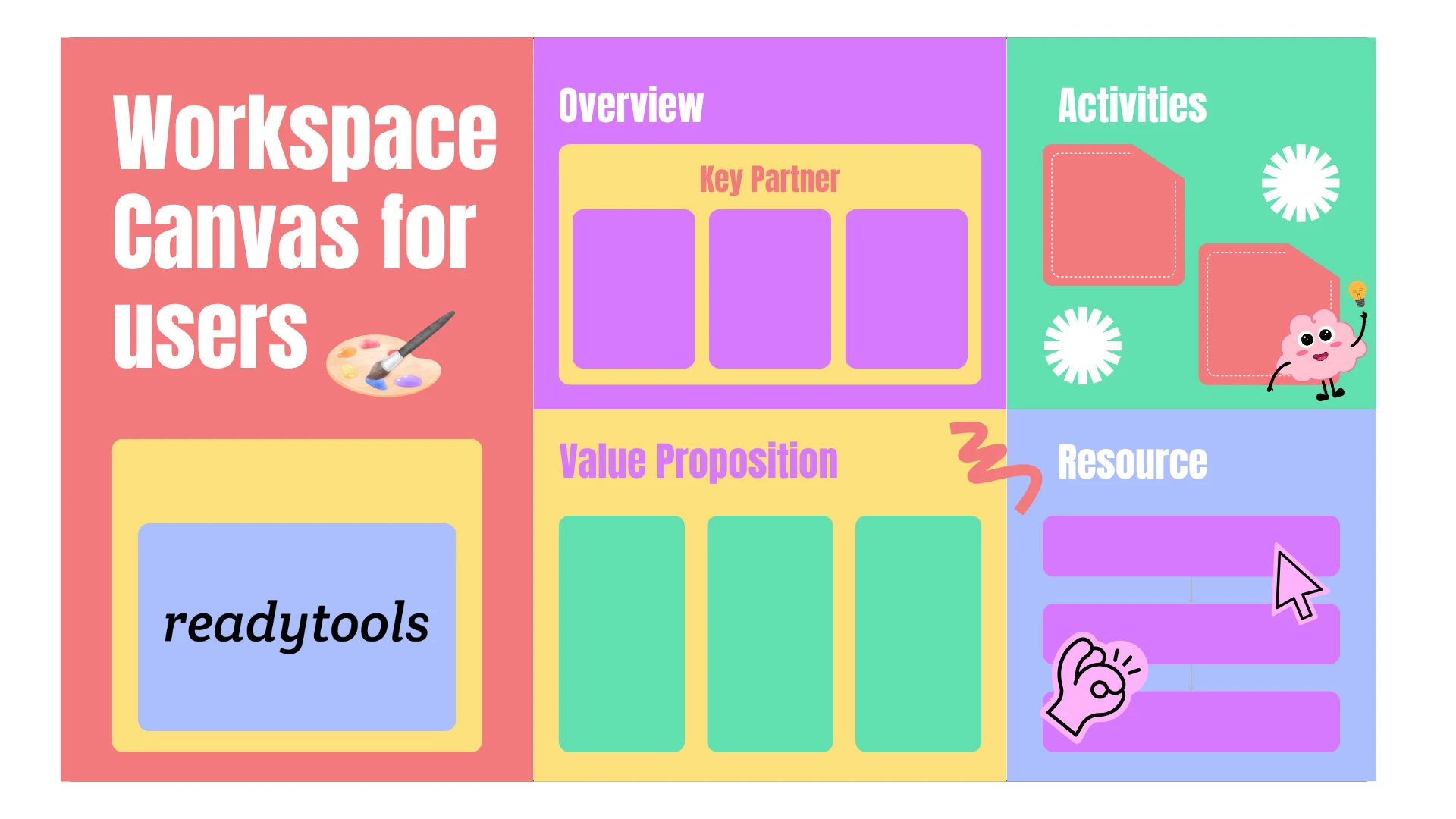
Learn how to add a Canvas block in ReadyTools, sketch ideas, build diagrams with Lara, embed files, collaborate, and export your work.
Cikk elolvasása
October 6, 2026
the platform has continued moving from individual API endpoints toward something much closer to the infrastructure we originally wanted to build.
Cikk elolvasása